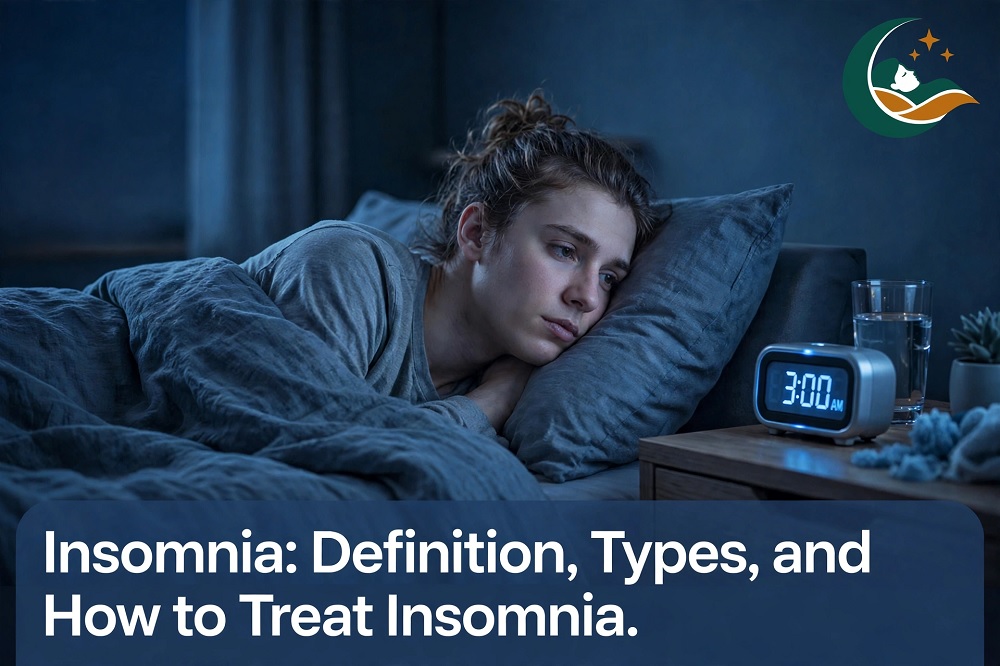
Insomnia is a common sleep disorder characterized by symptoms like persistent difficulty falling asleep at night, staying asleep at night, waking too early without getting enough sleep or getting restorative sleep, despite having an adequate opportunity to sleep. It may lead to various mental and physical health changes, as you may experience daytime fatigue, poor concentration, distorted balance, irritability, reduced performance, and mood or behavioral problems, Such as anxiety, depression, stress, chronic pain, or other sleep disorders.
Insomnia can be of different types based on duration and cause.
A. Based on duration
Insomnia can be of two types based on duration:
* Acute insomnia or short-term insomnia: Short-term sleep problems, often lasting days or a few weeks. It may be triggered by anxiety, stress, physical illness, travel, workload, examinations, or major life events.
* Chronic or long-term insomnia: Chronic insomnia is when sleep difficulty occurs at least 3 nights per week for at least 3 consecutive months, with associated depression, anxiety and daytime impairment.
Insomnia can be of two types based on its cause:
* Primary insomnia: Primary insomnia is when sleep difficulties are not directly caused by another medical, physical, psychiatric, or substance-related condition.
* Secondary/comorbid insomnia: Secondary insomnia occurs along with another mental or physical health condition, such as depression, anxiety, stress, pain, medication effects, or another sleep disorder.
How to treat insomnia with psychotherapy and medications?
Doctors suggest various psychotherapies for the treatment of insomnia. Cognitive Behavioral Therapy for Insomnia (CBT-I) is generally considered as the first-line psychological treatment for chronic insomnia by healthcare professionals.
CBT includes various methods which show how to treat insomnia. Such methods may include:
* Cognitive therapy: This therapy identifies and challenges unhelpful but considered beliefs and worries about mental health conditions or sleep, such as excessive fear about the results of not sleeping.
* Stimulus control: It helps the person associate the bed with sleep and complete rest rather than alertness and wakefulness. For example, going to bed only when you are feeling sleepy and leaving the bed if you are unable to get a proper sleep.
* Relaxation techniques: You can use various relaxation techniques such as breathing exercises, progressive muscle relaxation techniques, and mindfulness can reduce physical and mental arousal.
* Sleep hygiene: You should encourage a consistent sleep schedule at night, limiting caffeine/nicotine , screen time near bedtime, reducing stimulating activities such as exercise or workout before bed, and maintaining a comfortable sleep environment.
If psychotherapies are not working well for you, then you should know how to treat insomnia with medications such as benzodiazepines and non-benzodiazepines. Such medications are only available on doctor’s prescription after proper examination. Medication may be prescribed when symptoms are severe, short-term, or when psychological treatment such as psychotherapy alone is not sufficient.
Non-benzodiazepine hypnotics ("Z-drugs") such as zolpidem, zaleplon, and eszopiclone are used to treat insomnia. They enhance the working of certain inhibitory neurotransmitter i.e. GABA in the brain that can promote sleep.
Benzodiazepines such as temazepam and other benzodiazepines can reduce anxiety and promote sleep. It may cause sedation, tolerance, dependence, addiction and withdrawal, so they are generally used only on prescription by a professional health-care advisor and for limited periods.
Melatonin/melatonin-receptor medications are also useful in selected patients, particularly when circadian timing or heart related issues contribute to sleep problems.
As when you know how to treat insomnia with psychotherapy or medications, you should also know about certain precautions to be taken before or after getting the treatment. Sleeping medicines such as benzodiazepines or non-benzodiazepines should be taken only under medical guidance. Avoid combining sedative medications with other sedative substances such as alcohol, or opioids, because this can dangerously increase sedation and, thus, can cause respiratory depression.
Do not suddenly start or stop regularly using benzodiazepines or other medications without a doctor’s suggestions that it can cause serious withdrawal symptoms.
In summary: Insomnia is a common but treatable sleep disorder. It is important to know how to treat insomnia as its treatment is necessary for a smooth work of your life. CBT-I is the main evidence-based psychotherapy, while medications such as benzodiazepines or non-benzodiazepines can be useful in selected circumstances under appropriate and strict medical supervision.