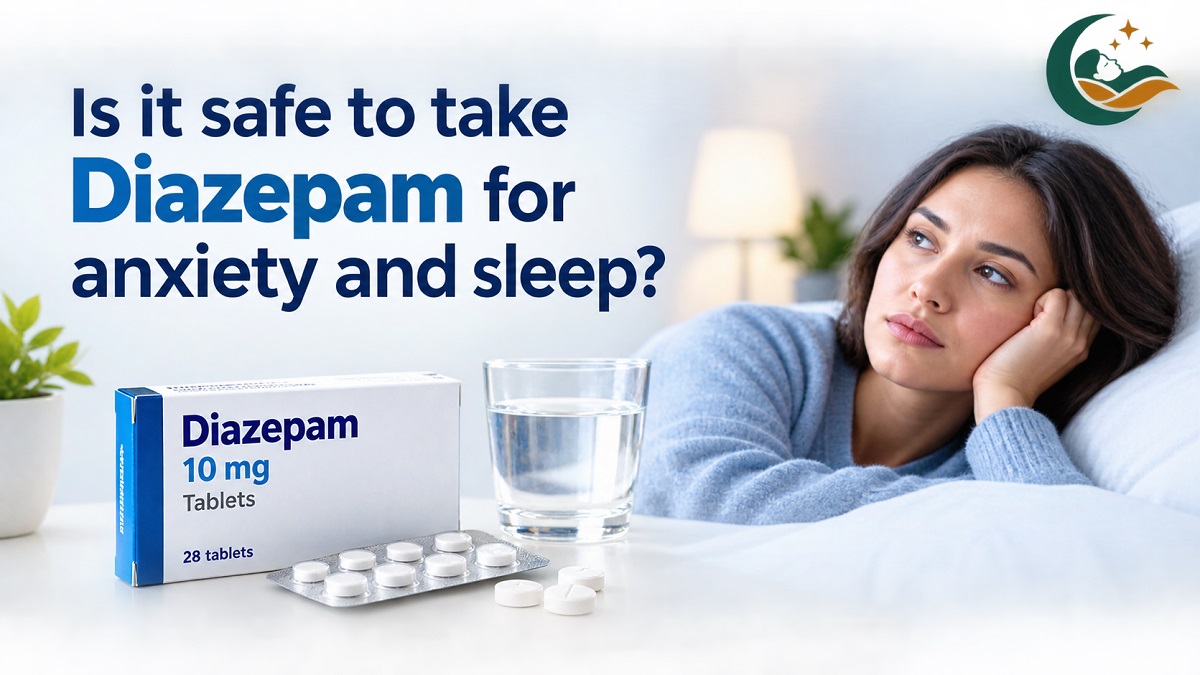
Diazepam is a prescription-based medicine which belongs to the benzodiazepine group.It has antianxiety, sedative, hypnotic, muscle-relaxant, and anticonvulsant effects. It works by increasing the effect of a certain neurotransmitter in the brain, i.e.GABA, that reduces excessive activity in the brain. Diazepam for anxiety and sleep should be used only under strict medical supervision because it can cause dependence and sedation.
Diazepam belongs to a class of drugs known as benzodiazepines. Therefore, it can help reduce severe anxiety and acute anxiety-related symptoms. Doctors generally prescribe diazepam for anxiety and sleep for short-term use, rather than being a long-term treatment. For persistent anxiety and sleep disorders, doctors may consider other treatments such as psychotherapy (particularly CBT) and other longer-term medications.
Diazepam can cause drowsiness, dizziness and sedation, so it may make a person relax and fall asleep more easily. However, diazepam for anxiety and sleep is not usually preferred as a routine and long-term treatment. Its long-term use can develop tolerance, which means that the same dose may become less effective after a certain period of time. It's overuse can also cause dependence and addiction.
It is important to take the necessary precautions before taking diazepam for anxiety and sleep on a daily basis. Such precautions are mentioned below:
* Take diazepam only as per the prescription from a healthcare professional. Do not increase or reduce the dose of the medication on your own.
* Never combine diazepam with other sedatives such as alcohol. The combination can cause extreme sedation and potentially dangerous respiratory or breathing problems.
Avoid combining diazepam with opioid painkillers, other sleeping pills, anxiety medication or other sedatives unless your healthcare professional specifically approves the combination.
Do not drive, operate machinery, or cycle on roads, if you feel sleepy, dizzy, drowsy, confused, or less alert.
Inform your doctor about your medical history and all medicines, supplements, and recreational substances you are using at present.
Extra caution may be required in younger and older adults because of increased risks of falls, faints, confusion, imbalance and excessive sedation.
People with certain breathing problems, severe kidney or liver disease, sleep apnea, or a history of addiction and substance dependence may require special assessment before taking diazepam for anxiety and sleep.
Regular use of diazepam for anxiety and sleep may cause common side effects which include drowsiness, dizziness, nausea, tiredness, muscle weakness, imbalanced coordination, reduced concentration, memory difficulties, confusion, etc. These common side effects can interfere with daily functioning and activities and may persist into the following day.
Overdose or misuse of diazepam for anxiety and sleep may cause some serious risks, which involve excessive sedation, loss of coordination, respiratory issues, severe confusion, unusual behavioural changes or agitation. You should seek urgent medical attention if such side effects cause life-threatening problems.
Overdose or misuse of Diazepam for anxiety and sleep can cause physical dependence and develop tolerance, especially with prolonged or higher-dose use.Suddenly, stopping regular treatment or increasing dosage can cause rebound anxiety, depression, insomnia, sweating, tremors, seizures, agitation, and irritation. Therefore, it is important to take the medication as per the prescription only, and it should generally be reduced gradually rather than stopped suddenly.
For ongoing anxiety, doctors suggest psychotherapy such as CBT, which is an appropriate long-term treatment and more suitable than relying on benzodiazepines.
For sleep disorders such as insomnia, improving sleep habits and CBT-I (cognitive behavioral therapy for insomnia) are commonly suggested.Diazepam for anxiety and sleep should not be used simply as a self-treatment without a proper prescription.
Diazepam for anxiety and sleep can be appropriate for certain age groups of people, but it is not a medication to self-medicate without any prescription for anxiety or sleep. The biggest precautions are avoiding other sedatives like alcohol and avoiding driving when you lose balance, and never changing or stopping regular treatment without proper medical guidance.