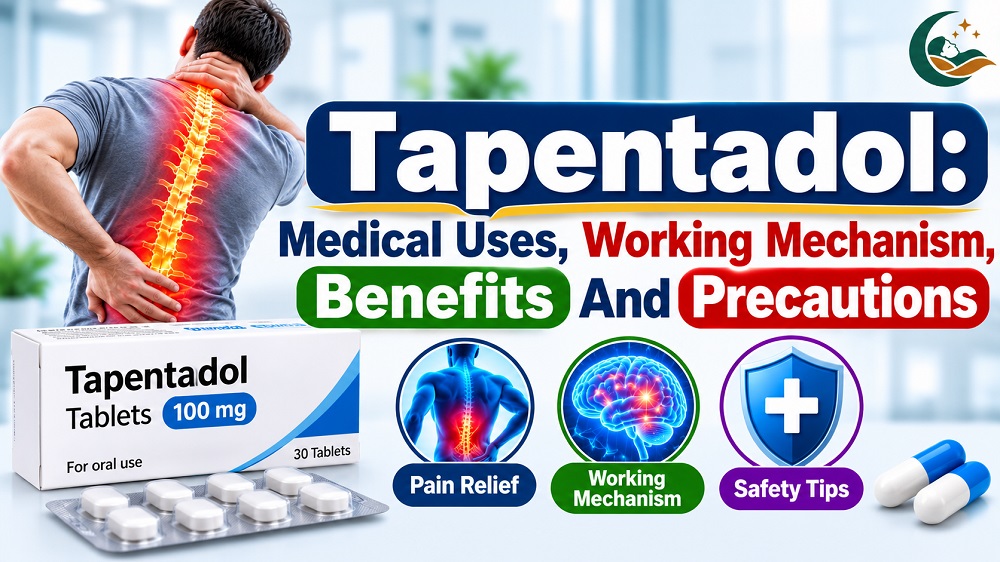
Tapentadol is a prescription-based opioid pain-relieving medication. Tapentadol Medical Uses involves the management of moderate to severe pain. It acts directly on the central nervous system (CNS) by changing the signals of how the brain and spinal cord process pain signals. It is available in both immediate-release and extended-release formulations. Doctors prescribe tapentadol for the treatment of specific pain conditions when other treatments may not provide sufficient relief. Overdose or misuse of Tapentadol has the potential to cause dependence, tolerance and serious side effects, so it must be used under strict medical supervision only.
1. Management of moderate to severe acute pain: Tapentadol Medical Uses is highly used for certain short-term painful conditions. Doctors may prescribe it following surgery or significant injuries. Tapentadol medical use is to reduce pain intensity and improve physical comfort.
2. Treatment of chronic pain: Doctors may prescribe extended-release tapentadol for selected patients experiencing severe and persistent pain. It may help manage pain associated with other long-term medical conditions. The treatment of pain with tapentadol requires regular medical assessment.
3. Diabetic peripheral neuropathy: Doctors prescribe extended-release tapentadol for managing neuropathic pain associated with diabetic peripheral neuropathy. This condition occurs when prolonged high blood sugar levels in the body damages peripheral nerves. It may help reduce burning, tingling, shivering, shooting pain, and painful sensitivity.
4. Pain associated with musculoskeletal conditions: In selected cases, doctors may prescribe tapentadol for the treatment of severe pain involving muscles, joints, or other body structures. Thus, it can reduce pain perception and improve balance and comfort. How Does Tapentadol Work?
Mu-opioid receptor activation: This type of mechanism activates certain opioid receptors in the brain and spinal cord, reducing the transmission and perception of pain signals in the body.
Noradrenaline reuptake inhibition: The other type of mechanism prevents the reabsorption of noradrenaline in the body, hence, increasing its availability in the nervous system.
Pain signal modulation: These combined actions of tapentadol help reduce the intensity of pain.
Central nervous system effects: It can also cause sedation, hypnotic effects and drowsiness.
Common Side Effects
Dizziness, lightheadedness, nausea and vomiting.
Drowsiness, fatigue, constipation
Headache, sweating
Dry mouth.
=Serious adverse effects can include respiratory depression, breathing issues, severe sedation, low blood pressure, fits or seizures, and serotonin syndrome.
Regular tapentadol medical use can cause serious side effects, for which you should seek immediate medical attention. Serious side effects may include:
Slow, shallow, or difficult breathing.
Extreme sleepiness or inability to wake up from bed on time.
Loss of balance and consciousness.
Severe confusion or unusual responsiveness.
Suspected overdose.
Tapentadol is a centrally acting opioid analgesic prescribed primarily to treat moderate to severe acute pain. It works through two different mechanisms, i.e. opioid receptor activation in the brain and noradrenaline reuptake inhibition. Tapentadol medical use may involve effective pain relief. Its risks of dependence, tolerance, addiction, overdose, and respiratory depression require careful and strict medical supervision.